Last spring, I did something most people would call over the top: I bought the twelve best-selling chopping boards in the UK, lined them up on my kitchen worktop, and spent two weeks working out which single one I'd actually trust to serve my family's food from.
Before I tell you which one survived — and which eleven I’d never again let anywhere near my grandchildren’s food — I owe you the story of how a grandmother from Manchester ended up running a bacteria test in her own kitchen. Because I never planned any of this. It started when a stranger refused to touch my chopping board.
For our silver wedding anniversary, our children surprised us with a private Japanese dinner, prepared by a real chef in our own home. Chef Hiro turned up with a knife roll worth more than my car — and next to the knives was his own chopping board. I laughed and told him we had plenty of boards. He just smiled, picked up my white plastic board, and held it up to the light.
“See all these scratches?” he asked, running his thumb across the grooves. “Every one of them is a place bacteria hide — deep down, where your sponge never reaches. You cut raw chicken here, then vegetables after. Where do you think the bacteria go? Straight onto the next thing you chop.”
I laughed it off at the table. But it stuck with me, and that night I couldn’t settle until I’d looked it up. Ten minutes later I found the figure that made me feel sick — reported by Dr Charles Gerba, a microbiologist at the University of Arizona: an ordinary kitchen chopping board can carry up to 200 times more faecal bacteria than a toilet seat — not on the smooth part you can see, but down inside the knife marks you can’t.
I binned the board before bed. But I had no faith the next shop assistant was going to hand me a safe new one — not after that. If most of the boards on the British market were going to fail, I wanted to see them fail with my own eyes. So the following week, twelve boards landed on my doormat, and the real test began.
How I tested them — and why eleven failed the same way
Let me be honest about what this was — and what it wasn’t. I don’t have a microbiology lab at home. Instead, I judged each board on two things: what published food-science research has already proven about how bacteria behave on each material — and a simple scratch-and-light test on my own worktop, the same one Hiro had done on me.
The research is impossible to argue with. A landmark study in the Journal of Food Protection took perfectly ordinary plastic and wooden boards, contaminated them with common kitchen bacteria, and tracked what happened. On a smooth, brand-new surface, the bacteria washed away. But the moment the board was scratched and full of knife marks — the way any board in a real kitchen is — the bacteria settled into the grooves, survived hot water and washing-up liquid, and in some cases multiplied overnight.
A more recent study followed the bacteria one step further: a board used for raw meat transferred them directly onto the salad or bread cut on the same board minutes later. Not in some extreme lab trial — on a perfectly normal board, in a perfectly normal everyday situation. Exactly the danger Hiro had pointed to on my worktop.
So my testing criterion was simple: can this board be scratched — and once it is, can bacteria hide in it?
That’s where eleven of my twelve boards fell apart. Five were plastic, four were wood, two were bamboo — eleven boards, three materials, the same problem. All either porous or soft enough to scratch, and under the kitchen light, every one of them had the grooves to prove it. On the bacteria test, they didn’t just do badly. They failed flat.
The eleven that failed
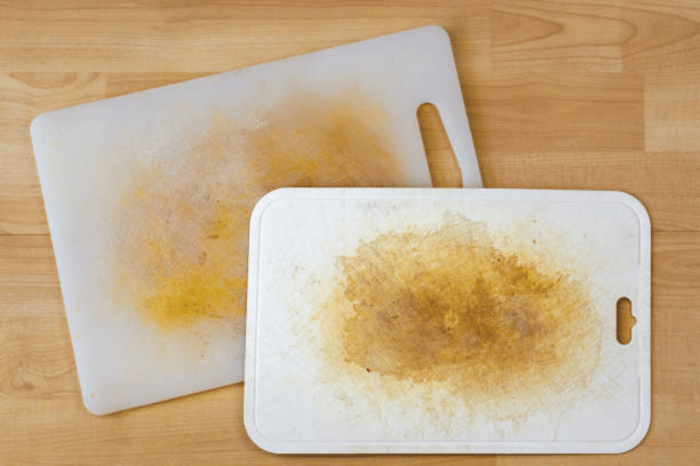
The five plastic boards were the worst — and they’re exactly the kind sitting in most British kitchens. Every knife cut carves a microscopic crevice down into the surface. Food debris, moisture and bacteria settle inside those cuts, far too deep for a sponge to reach. The older the board, the more hiding places it has — and the more raw chicken, fish and meat juice it’s soaked up.
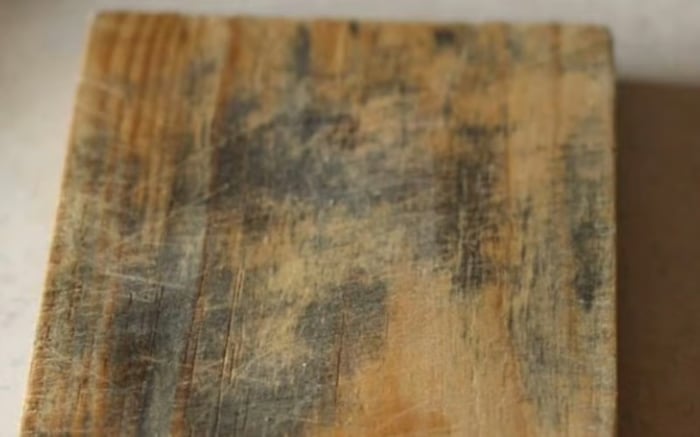
The four wooden boards were no better. Wood is porous — bacteria, moisture and residue sink straight into the grain and are almost impossible to fully clean out. Skip the oiling routine and they warp, split and start to develop mould. Who honestly wants to spend an evening rubbing mineral oil into a heavy wooden slab?
The two bamboo boards had the same porosity problem, and many are held together with glues that can contain formaldehyde — a known carcinogen.
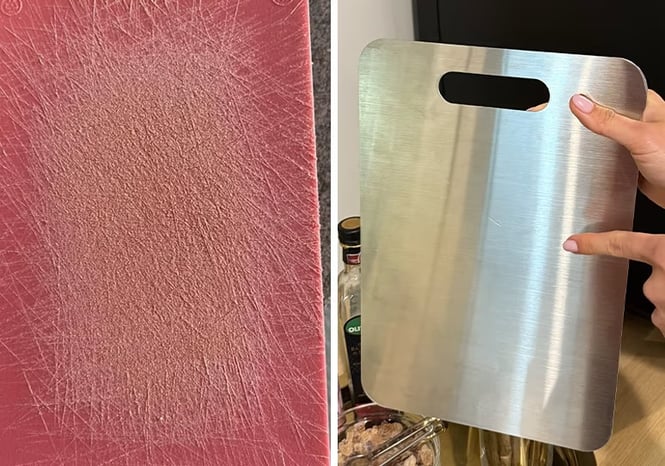
And before you ask about the two materials everyone suggests next — glass and stainless steel — I’ve looked hard at both. They don’t trap bacteria the way plastic and wood do. But they fail a different test: they wreck your knives. Glass is slippery, deafeningly loud, and blunts the blade with every cut; steel is nearly as bad. Less control, more force, and constant trips to the whetstone. Safer for bacteria, worse for everything else. Not the answer.
The boards that failed — and why
Plastic (PE/PP)Bacteria survive in knife scratches
Wood / BambooSoaks up bacteria and mould, needs oiling
Glass / CeramicDestroys knife edges in no time
Stainless steelBlunts knives, slippery, deafening
Eleven boards. Every single one a compromise I wasn’t willing to serve my grandchildren’s food from. That left the twelfth.
The one board that passed
I’d added the twelfth board on a gut feeling — because I couldn’t stop thinking about the board Hiro had pulled out of his knife roll. Metal, but too light to be steel, with a soft, matte sheen. I messaged him: “What was that board you brought to our dinner?”
His reply: “It’s titanium. I don’t cut on anything else.”
Titanium sounded like something for aeroplanes, not my kitchen worktop. But the more I read, the clearer it became why it was the only board that passed:
It’s completely non-porous. Unlike wood or bamboo, there’s nowhere for bacteria, moisture or residue to hide. Rinse it for a second, and it’s clean.
There are no grooves for bacteria to hide in. It’s a hard, solid metal — the blade doesn’t carve crevices into it like it does with plastic. Nothing to trap bacteria, nowhere for microbes to burrow.
It’s gentle on knives. That’s what surprised me most. Unlike glass, ceramic or steel — which absolutely massacre a knife edge — titanium’s surface actually helps keep blades sharper for longer.
And it actively fights bacteria. Titanium dioxide, the oxide layer that naturally forms on the surface, has been studied in Scientific Reports for exactly its effect against the foodborne pathogens I’d been reading about — E. coli and Staphylococcus aureus. So the surface isn’t just easy to wipe down; the research suggests it actively works against bacteria from the start.
It’s used in medical implants because it’s biocompatible and non-toxic, and it’s approved for food contact. One board out of twelve ticked every single box — and it was the one material I’d never heard of anyone using in a kitchen.
The brand that kept coming up
Finding a titanium board that was actually available in the UK, properly made and not insanely expensive, took a fair bit of digging. Most of what I found was either industrial-grade sheeting or cheap imports that weren’t real titanium. But one name kept coming up again and again on the forums, review sites and Facebook cookery groups I combed through: Vanotium.
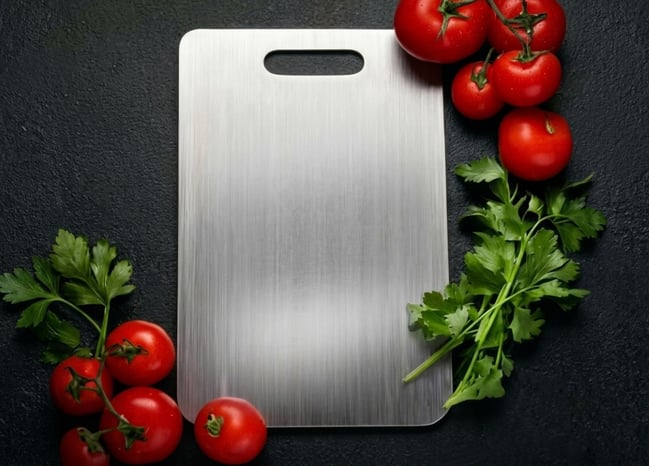
Vanotium makes a chopping board out of solid titanium, designed specifically for home cooks. It has more than 1,800 verified reviews with an average of 4.7 stars. Before ordering, I sent the link to Hiro to be absolutely sure. His reply was three words: “That’s the one.”
No trapped bacteria. No cross-contamination. No blunt knives. No discolouration. No smells. Plus a 30-day money-back guarantee. I ordered that same evening. Delivery took about a week.
I put the winner through its paces in my own kitchen
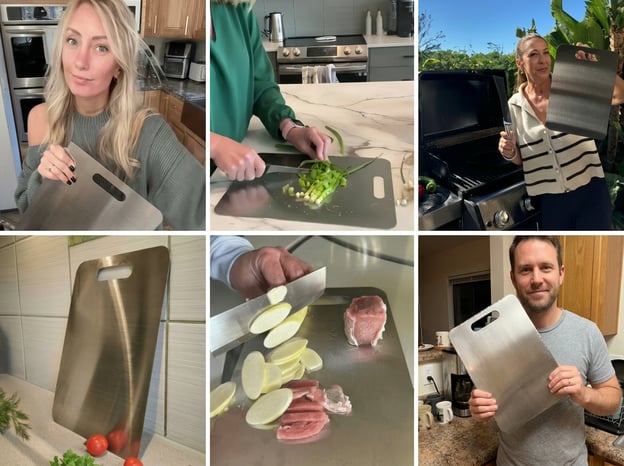
When it arrived, the first thing I noticed was how light it was — I’d been expecting something heavy like a steel plate. Thanks to the double-sided design, I use one side for raw meat and the other for vegetables. No cross-contamination, no juggling act with multiple boards.
First meal: a stir-fry. Peppers, spring onions, garlic, ginger. The knife glided — no sticking like plastic, no horrible scraping like glass. And the washing-up? I held it under the tap, gave it a quick wipe — done. No grooves to scrub. No garlic smell. No turmeric stains. It looked exactly as it did out of the box.
Three months on — the honest verdict
I’ve used my Vanotium board every single day for three months. Here’s my report:
My knives are noticeably sharper. I used to sharpen my chef’s knife every other week. Since making the switch, I haven’t touched the whetstone once.
No smells, ever. I cook with garlic, onions and fish constantly. My old boards held onto smells for days. Vanotium? A quick rinse and it’s neutral again.
It still looks brand new. Not a single scratch, stain or wear mark after three months of heavy daily use.
Peace of mind. That’s what really matters. As we get older, our immune systems are slower to fight off the bacteria that cause food poisoning — the Food Standards Agency lists adults over 65 among the groups most often hospitalised with Salmonella, Listeria and E. coli. I no longer lie awake wondering what’s been growing in the grooves of the board my grandchildren’s food touches. I know exactly what their food is meeting now: a solid, non-porous titanium surface — nothing for bacteria to burrow into, nothing hiding somewhere I can’t see.
So what about the price?
I won’t sugar-coat it — a titanium board costs more upfront than a £15 plastic board from Tesco or Asda. But here’s how I look at it.
Over the last 30 years, I’ve bought a new plastic board roughly every 12 months. That’s at least 30 boards. Add to that the knife sharpening bills I ran up after glass boards wrecked my blades during my “experimenting phase” — and I’m easily over £500 in chopping boards and knife maintenance.
Vanotium is built to last forever. Buy once. Done. No replacements, no maintenance, no bills from the whetstone. Looked at that way, it’s the cheapest chopping board I’ve ever bought.
Right now there’s only one offer, and it’s simple: one board for £59 — half the normal £118. No tiered discounts, no small-print catches. (Want an extra one as a gift or for the holiday cottage, there are multi-packs — but the single board is the deal to grab.) That’s still less than a week’s shop, and it’s the last chopping board you ever buy. They do sell out regularly in the UK, though, so I’d check stock sooner rather than later.
What other buyers are saying